Did you know that stress and poor sleep don’t just affect how your skin looks, but they also influence how well your cosmetic treatments work?
You might already feel it: a sleepless night shows up as dull skin the next day.
Your skin is more than a surface. It’s a living, responsive organ. How you feel and rest plays a big role in how it heals, glows, and ages.
Let’s explore how stress and sleep interact with your skin and what you can do to get the best results from your treatments.
1. Why Stress Matters More Than You Think?
Stress is your body’s alert system. It’s beneficial in short bursts but exhausting when constant.
When you’re stressed:
- Your body releases cortisol (the stress hormone)
- Blood flow shifts away from non-essential systems
- Inflammation increases
- Repair processes slow down
2. How Stress Shows Up on Your Skin
Stress can contribute to these common concerns:
- More redness and sensitivity
- Acne or breakouts
- Dryness or dullness
- Slower healing after treatments
- Exaggerated swelling or irritation
Think of stress like a roadblock in the skin’s repair highway.
When your system is overwhelmed, your skin can’t prioritise healing or regenerate smoothly, especially after treatments like lasers, injectables, or peels.
3. Sleep: Your Skin’s Night Shift
Sleep isn’t just “rest”. It’s when your body goes into full repair mode.
Deep sleep helps in:
- Collagen production
- Skin cell turnover
- Decreased inflammation
- Improves circulation
In simple terms: your skin renews while you snooze.
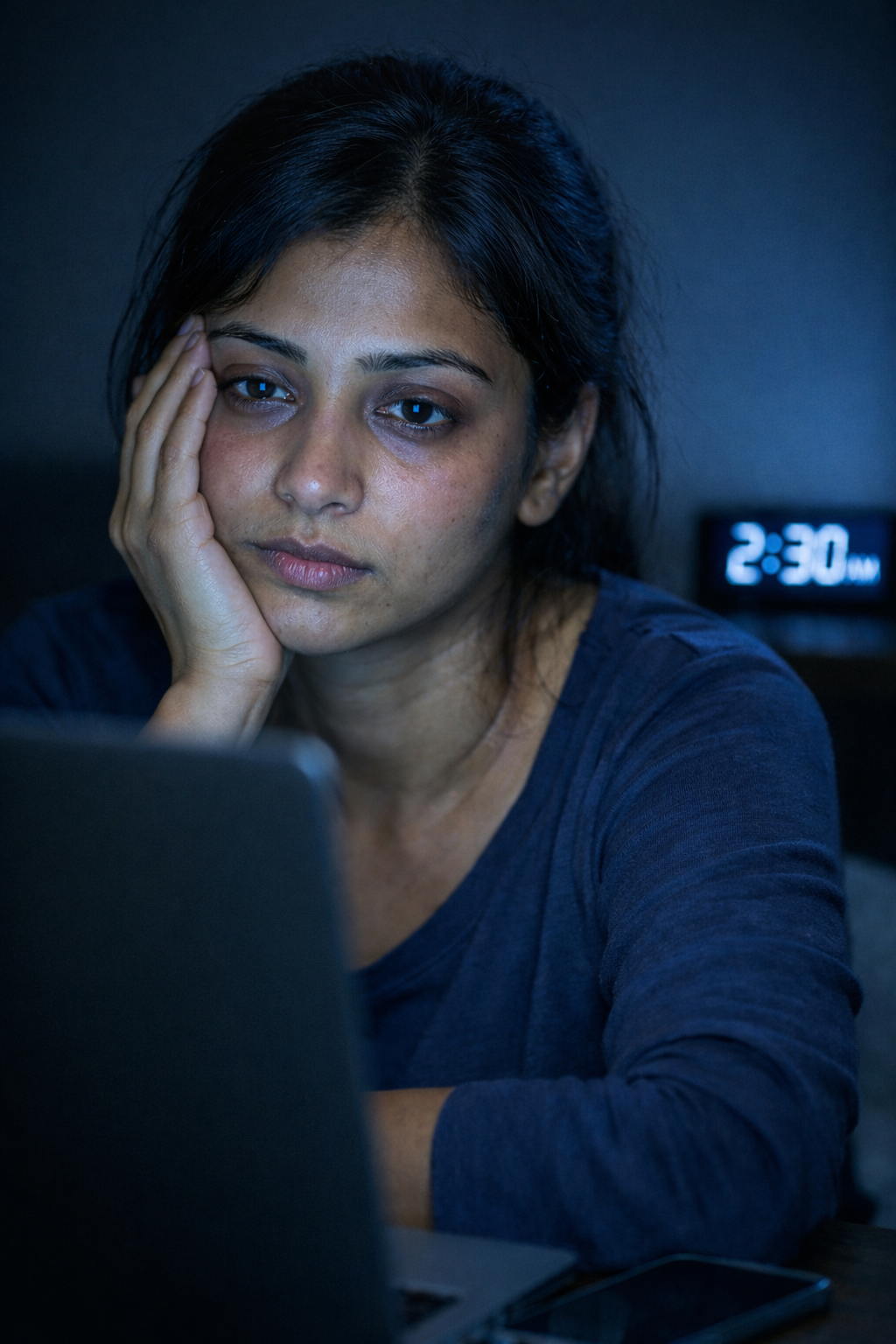
If you’re not sleeping well, your skin misses out on this nightly recharge.
4. Signs Your Skin Isn’t Loving Your Sleep Habits
If your nights are restless, your skin might show:
- Tired-looking complexion
- Under-eye darkness
- Slower fading of redness or irritation
- Weak bounce and elasticity
Over time, chronic sleep deprivation can even weaken the skin barrier, making your complexion more reactive and less resilient.
5. Stress + Sleep: A Double Trouble for Treatment Results
When it comes to cosmetic treatments, whether it’s a HydraFacial, laser therapy, fillers, or skin resurfacing, your skin’s recovery matters.
Here’s why:
- Stress can:
- Delay healing
- Increase inflammation
- Make skin more reactive
- Affect confidence if results feel slower
- Poor sleep can:
- Reduce treatment effectiveness
- Prolong redness and swelling
- Lower your skin’s natural regeneration
So even the best treatment can underperform if your body isn’t in a balanced, well-rested state.
6. You Can Support Your Skin With These Simple Habits
Here are practical ways to boost healing, calm stress, and help your skin thrive:
- A. Prioritise Better Sleep: aim for 7–9 hours of quality sleep nightly.
Tips that work:
a. Turn off screens 60 minutes before bed.
b. Keep your room cool and dim
c. Wind down with calming rituals (light reading, gentle stretches)
d. Maintain a consistent sleep schedule
Better sleep = better skin recovery.
- B. Hydrate Throughout the Day
Dehydration makes your skin look dull and inflamed.
- Carry a water bottle
- Sip consistently; don’t wait until you’re thirsty.
- Eat hydrating foods like cucumber, watermelon, or coconut water.
Well-hydrated skin heals faster and feels more comfortable.
- C. Manage Stress in Small, Meaningful Ways
You don’t need major life changes, just simple and consistent habits:
- Short breathing sessions (5 minutes daily)
- Gentle yoga or stretching
- A calming cup of herbal tea before bed
- Brief walks in nature
Each small step helps your body move from “alert mode” to “repair mode”.
- D. Treat Your Skin With Kindness
After treatments, your skincare routine matters more than ever.Instead of harsh products, focus on soothing and protective care:
a. Gentle cleanser
b. Calming moisturiser
c. Broad-spectrum SPF
d. Barrier-supporting ingredients (ceramides, hyaluronic acid)
A supportive routine gives your skin the environment it needs to repair quickly and beautifully.
7. What You Might Notice When You Improve Sleep & Stress
A. Brighter, calmer complexion
B. Faster recovery after treatments
C. Less redness and irritation
D. More even skin tone
E. Stronger hydration and bounce
Your skin isn’t just a reflection of products. Instead, it’s a reflection of how healthy your body is and how quickly it recovers and renews itself.
The Bottom Line
Stress and sleep are not “extra” to your skincare journey; they’re essential parts of it.
Even the most advanced treatments can under-deliver if your body is stressed or overtired, but with intentional care for your mind and body, your skin will thank you.
Your path to glowing, healthy skin isn’t just about what happens in the clinic, it’s also about how you care for yourself outside of it.