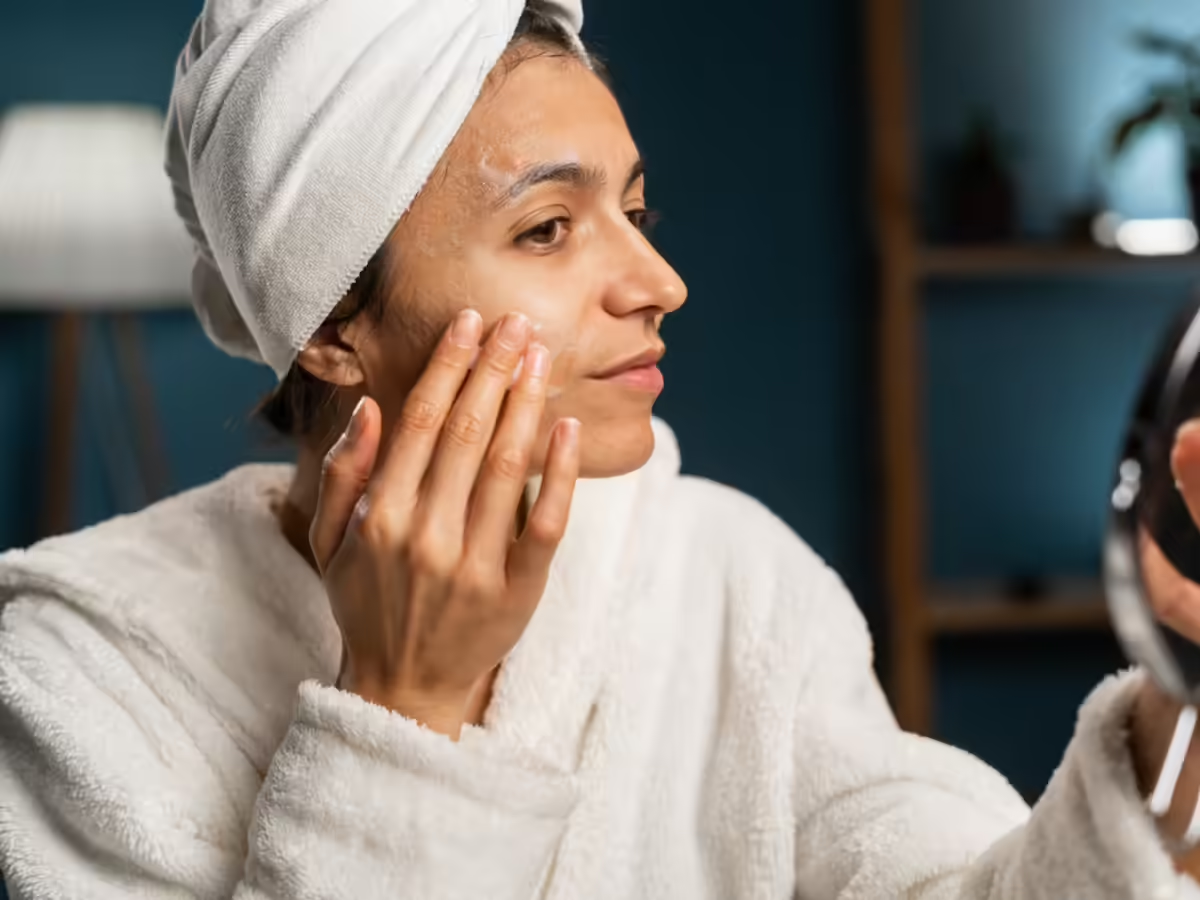
It’s one of the most common frustrations patients express during consultations: “I’ve tried everything, but my skin is still not improving.”
If you’ve invested time and money into treatments but see little to no results, the issue often isn’t just the treatment itself. Several underlying factors explain why skin treatments fail, and understanding them is key to getting better outcomes.
This article breaks down the real, often overlooked reasons behind ineffective skincare, and what you can do about it.
1. Incorrect Diagnosis of the Skin Condition
One of the biggest reasons for skin not improving after treatment is starting with the wrong diagnosis.
Many skin concerns look similar but require completely different approaches. For example:
- Pigmentation vs melasma vs post-inflammatory hyperpigmentation
- Acne vs hormonal acne vs fungal acne
- Sensitive skin vs barrier-damaged skin
If the root cause is misidentified, even advanced treatments will not deliver results.
Why this matters:
- Treatments target specific pathways (pigment, inflammation, oil production)
- A mismatch leads to ineffective skincare results
2. Lack of Treatment Consistency
Achieving lasting results with skin rejuvenation in Mumbai, requires patience, as treatments like chemical peels and lasers work cumulatively over multiple sessions.
- Stopping treatments too early
- Skipping follow-up sessions
- Changing products frequently
For example:
- Laser treatments often require multiple sessions
- Chemical peels work cumulatively
- Collagen stimulation treatments take weeks to show visible results
Most skin concerns improve gradually, not instantly. Lack of patience is a major reason behind skin problems not improving.
3. Poor Homecare Routine
Clinic treatments alone are not enough. What you do daily plays a significant role in your results.
Key issues:
- Not using sunscreen regularly
- Incorrect product layering
- Using incompatible or harsh products
- Skipping moisturisation
Why does this lead to failure:
- UV exposure reverses pigmentation treatments
- Over-exfoliation damages the skin barrier
- Lack of hydration slows down healing
Even the best treatments will fail if the home care routine is not aligned with your treatment plan.
4. Skin Barrier Damage
A compromised skin barrier is one of the most overlooked causes of skincare not working.
Signs of barrier damage:
- Redness
- Sensitivity
- Burning sensation
- Flaky or tight skin
Causes:
- Overuse of actives (retinol, acids)
- Frequent exfoliation
- Using multiple products without guidance
When the barrier is damaged:
- Skin cannot tolerate treatments
- Healing slows down
- Results become inconsistent
5. Wrong Treatment Selection
Finding the best treatment for acne scars in Mumbai requires a personalized approach, as no single procedure works for every skin type or concern.
Examples:
- Using mild treatments for deep pigmentation
- Choosing facials when medical treatments are needed
- Opting for aggressive treatments on sensitive skin
Why skin treatments fail in this case:
- The treatment intensity doesn’t match the condition
- Results are either too slow or cause irritation
A personalised approach is essential to avoid ineffective skincare reasons.
6. Hormonal and Internal Factors
Some skin concerns are not purely external.
Common internal causes:
- Hormonal imbalances (PCOS, thyroid issues)
- Stress and cortisol levels
- Nutritional deficiencies
- Poor sleep
These factors add up to:
- Persistent acne
- Recurring pigmentation
- Slow healing
In such cases, topical or procedural treatments alone are not enough.
7. Unrealistic Expectations
Another major reason for frustration is expecting unrealistic timelines or results.
For example:
- Expecting pigmentation to disappear in one session
- Assuming acne scars will vanish completely
- Expecting zero downtime treatments to deliver surgical-level results
What to understand:
- Skin improvement is progressive
- Most treatments aim for visible improvement, not perfection
Unrealistic expectations often lead people to believe their skin is not improving after treatment, even when it actually is.
8. Inconsistent Treatment Planning
Switching clinics or treatment plans frequently can disrupt progress.
Common patterns:
- Trying multiple clinics without completing protocols
- Mixing DIY treatments with professional ones
- Following online trends without medical advice
This leads to:
- Interrupted treatment cycles
- Conflicting approaches
- Reduced overall effectiveness
Consistency in treatment planning is critical for long-term results.
9. Environmental and Lifestyle Factors
Your environment and lifestyle directly impact how your skin responds to treatment.
Key contributors:
- Pollution exposure
- Poor diet (high sugar, processed food)
- Smoking or alcohol
- Lack of hydration
These factors can:
- Increase oxidative stress
- Slow down skin repair
- Trigger recurring skin issues
Ignoring these can be a hidden reason behind skin problems not improving.
10. Lack of Personalisation
Generic skincare plans rarely work for complex skin concerns.
Every individual differs in:
- Skin type
- Sensitivity levels
- Healing capacity
- Lifestyle
Without personalisation:
- Treatments may be too aggressive or too mild
- Results become inconsistent
This is one of the most common ineffective skincare reasons seen in patients.
What Actually Works: A Structured Approach
To see real improvement, your treatment plan should include:
- Accurate diagnosis of the skin condition
- Customised treatment plan based on your skin
- Consistent sessions and follow-ups
- Aligned home care routine
- Necessary lifestyle adjustments
Final Takeaway
If your skin is not improving after treatment, it doesn’t necessarily mean treatments aren’t working. It often means something in the process needs to be corrected.
The key is to move away from trial-and-error and focus on structured, expert-led care. When the right diagnosis, treatment, and routine come together, results follow. Gradually, but effectively.The focus is not just on performing treatments, but on understanding why your skin behaves the way it does. At My Aesthetic Plus, your every step is aligned toward real, visible improvement.